Most Pakistani investors think about Dubai property from one angle: how do I buy it? The question that matters just as much, and the one that determines your actual financial outcome, is this: once you own it, what does property for rent in Dubai actually pay you?
The answer in 2026 is significantly better than most Pakistani investors expect. And it is dramatically better than what comparable domestic rental assets deliver in Karachi, Lahore, or Islamabad.
This guide is written specifically for Pakistani investors who will get a clear picture of realistic yields by community, tenant profiles, short-term versus long-term rental strategy, how Pakistani landlords collect rent remotely, and exactly what the net income looks like in Pakistani rupees after all costs.
Property for Rent in Dubai vs. Pakistani Rental Assets
Before getting into specific numbers, it is worth establishing the structural reasons why property for rent in Dubai consistently outperforms Pakistani residential rental assets. These reasons are not temporary market conditions. They are baked into the fundamental economics of both markets.
Understanding them helps Pakistani investors make confident, long-term decisions rather than chasing short-term yield fluctuations in either market.
Rental Market Driven by a Transient
Dubai’s population is approximately 90% expatriate, according to the Dubai Statistics Centre. That demographic reality is the engine behind rental demand for property for rent in Dubai. The vast majority of Dubai residents rent rather than own, and the inflow of new residents, currently running at approximately 100,000 per year, creates a structural, self-renewing tenant pool that Pakistani landlords benefit from directly.
Pakistani rental markets in DHA Karachi or Gulberg Lahore are predominantly served by domestic Pakistani tenants whose rental budgets are constrained by local income levels and rupee purchasing power.
No Tax on Any Rental Income
Every dirham earned from property for rent in Dubai belongs entirely to the landlord. The UAE imposes no income tax, no rental income tax, and no capital gains tax on residential property. This is a constitutional feature of the UAE tax framework, not a temporary incentive or a policy that can be reversed by a government budget.
According to the Federal Board of Revenue’s income tax guidelines, rental income in Pakistan is taxable at progressive rates from 5% to as high as 35% for higher-income landlords. On PKR 1.5 million in annual rental income, the tax liability can reach PKR 150,000 to PKR 350,000 depending on total taxable income.
AED Rental Income Is USD-Equivalent by Design
Rent collected from properties for rent in Dubai is denominated in AED. Because the AED is pegged to the USD at a fixed rate of AED 3.67 per USD, your rental income is effectively USD-equivalent income. Every year that the PKR weakens against the USD, the PKR value of your Dubai rental income increases automatically.
According to the State Bank of Pakistan’s exchange rate records, the rupee has depreciated against the dollar consistently over the past decade. Pakistani landlords earning AED rental income have seen their PKR-equivalent income grow materially without any change in their Dubai rental rate, simply because the rupee has weakened.
This currency dynamic does not exist for Pakistani domestic landlords, whose rental income and asset value move in the same depreciating currency.
Property for Rent in Dubai: Community Breakdown
Rental yields from property for rent in Dubai vary significantly by community, property type, and rental strategy. Here is a clear breakdown of what Pakistani landlords can realistically expect across the key communities in 2026.
All yield figures are sourced from Bayut’s 2025 Dubai Rental Market Report and Property Finder’s Dubai Market Insights, both of which publish transaction-based yield data rather than estimated projections.
Dubai Marina: Premium Rents and Global Tenant Demand
Dubai Marina is the benchmark community for property for rent in Dubai, targeting the premium tenant segment. International professionals, senior corporate executives, and long-term expat families pay premium rents for Marina addresses.
Annual rental rates for property for rent in Dubai Marina in 2026:
- Studio apartments: AED 70,000 to AED 95,000 per year
- One-bedroom apartments: AED 90,000 to AED 135,000 per year
- Two-bedroom apartments: AED 140,000 to AED 220,000 per year
Pakistani investors who own property for rent in Dubai Marina can realistically expect a net annual income of AED 60,000 to AED 110,000 on a one-bedroom apartment after management fees, which translates to approximately PKR 4.4 crore to PKR 8 crore at current exchange rates, completely tax-free.
Jumeirah Village Circle: Highest Yield Percentage on Entry Prices
JVC is the strongest community for yield percentage in the accessible budget segment of property for rent in Dubai. The combination of newer buildings, central location, and strong demand from Dubai’s young professional workforce delivers yields that outperform many premium communities on a percentage basis.
Annual rental rates for property for rent in Dubai in JVC in 2026:
- Studio apartments: AED 40,000 to AED 60,000 per year
- One-bedroom apartments: AED 55,000 to AED 80,000 per year
- Two-bedroom apartments: AED 80,000 to AED 115,000 per year
Average rental yields in JVC range from 7.5% to 9.5% annually, according to Property Finder’s community yield data. Vacancy rates are low, typically below 5% in well-managed buildings, because JVC’s tenant pool draws from multiple nearby employment hubs simultaneously.
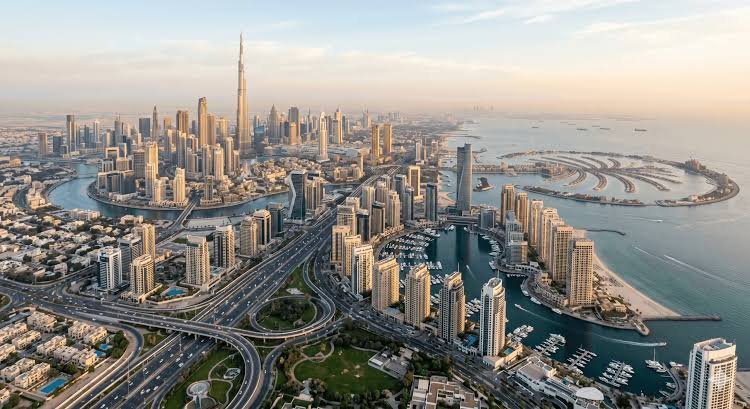
Downtown Dubai: Prestige Address with Tourism-Driven Short-Term
Downtown Dubai is the global face of the city. The Burj Khalifa, Dubai Mall, and Dubai Opera District make it the highest-traffic tourist and business destination in the UAE. For Pakistani landlords targeting short-term rental income, property for rent in Downtown Dubai commands some of the highest nightly rates in the entire market.
Annual rental rates for property for rent in Dubai Downtown in 2026:
- Studio apartments: AED 80,000 to AED 110,000 per year on long-term tenancy
- One-bedroom apartments: AED 110,000 to AED 160,000 per year on long-term tenancy
- Short-term rental premium: 30% to 50% above long-term rates on managed holiday units
Long-term yield averages in Downtown Dubai sit at 5.5% to 7.5%, slightly lower than JVC on a percentage basis because entry prices are higher. However, the capital appreciation story in Downtown is stronger, with CBRE Dubai’s Q3 2025 Report noting sustained price growth of 10% to 15% year-on-year in the Downtown residential segment.
For investors still evaluating whether to buy in Dubai Marina, our guide on buying an apartment in Dubai Marina covers entry prices, payment plans, and the full investment case in detail.
Short-Term vs Long-Term Rental Strategy
One of the most important decisions Pakistani owners of property for rent in Dubai must make is whether to manage their unit as a short-term holiday rental or place it on a standard long-term tenancy. Both strategies are legal, both have active markets, and both have distinct financial profiles.
Long-Term Tenancy: Stable, Predictable Income
A standard long-term tenancy in Dubai runs for 12 months, with post-dated cheques provided by the tenant at the start of the contract. Tenants typically provide one to four cheques covering the full annual rent, giving the landlord upfront income visibility.
Advantages of long-term tenancy for Pakistani landlords include:
- Predictable annual income paid upfront in cheque form
- Lower management involvement and maintenance frequency
- Ejari registration provides full legal protection for the tenancy
Long-term tenancy is the preferred strategy for Pakistani investors who want passive, low-maintenance income from property for rent in Dubai without the complexity of short-term guest management.
Short-Term Holiday Rental: Higher Yield with Active Management
Short-term holiday rental management involves listing your Dubai property on platforms like Airbnb, Booking.com, and local Dubai short-term rental operators. A DTCM (Department of Tourism and Commerce Marketing) permit is required to legally operate a short-term rental in Dubai, which a licensed holiday home management company can obtain on your behalf.
Short-term rental advantages for Pakistani landlords include:
- Yield premium of 30% to 60% above long-term tenancy rates in high-demand communities
- Flexibility to block dates for personal use if desired
- No single-tenant dependency risk
The trade-off is higher management fees, typically 15% to 25% of revenue for full-service short-term management, and greater variability in monthly income compared to the stability of a standard tenancy.
Our guide on property management companies in Dubai covers the full selection process for both long-term and short-term management operators in detail.
Pakistani Landlords Collect Rental Income Remotely
The logistics of managing property for rent in Dubai from Pakistan are one of the most common practical concerns for first-time overseas investors. The good news is that the process is genuinely straightforward when the right management infrastructure is in place.
How the Income Flow Works
When you own property for rent in Dubai and manage it through a licensed property management company, the income flows to your Pakistani bank account, works like this:
- Tenant pays rent via post-dated cheques or bank transfer to your management company’s client account
- The management company deducts its management fee and any approved maintenance costs
- Net rental income is transferred to your designated UAE or Pakistani bank account, typically monthly or quarterly
The process requires no physical presence in Dubai at any stage. Pakistani landlords in Karachi, Lahore, and Islamabad regularly receive monthly income statements and bank transfers from their Dubai management companies without visiting the UAE more than once or twice per year at most.
Roshan Digital Account for Income Management
Pakistani investors who hold a Roshan Digital Account can receive AED transfers from their Dubai management company directly into their RDA and choose when to convert to PKR based on exchange rate conditions. This flexibility adds a layer of currency management that standard Pakistani bank accounts do not offer.
According to the State Bank of Pakistan’s Roshan Digital Account guidelines, RDA holders can receive international remittances, hold foreign currency balances, and convert to PKR at their discretion. For Pakistani landlords earning AED rental income, this is the most flexible and tax-efficient income management structure available.
Legal Requirements for Renting Out Your Dubai Property
Property for rent in Dubai must comply with RERA’s tenancy regulations. The key legal requirements for Pakistani landlords are:
- Tenancy contracts must specify the rent amount, payment terms, and tenancy duration
- Landlords must provide 12 months’ notice of any decision not to renew a tenancy
- Rent increases at renewal must comply with the RERA Rental Increase Calculator
A licensed property management company handles all of these compliance requirements on your behalf. For Pakistani landlords managing remotely, this compliance coverage is one of the most valuable services a management company provides.
Frequently Asked Questions
What rental yield can I expect from a property for rent in Dubai as a Pakistani investor?
Realistic net yields after management fees range from 6% to 10% annually, depending on community and property type. JVC delivers 7.5% to 9.5%, Dubai Marina delivers 6% to 9%, and Downtown Dubai delivers 5.5% to 7.5%. All yields are completely tax-free in the UAE, which makes them significantly more valuable in real terms than comparable gross yields from Pakistani domestic property.
How do I find tenants for my property for rent in Dubai from Pakistan?
A licensed property management company handles all tenant sourcing on your behalf. They list your property on Bayut, Property Finder, and their own networks, screen applicants, conduct viewings, and present you with shortlisted tenant recommendations. You approve the final selection remotely. The process typically produces a qualified tenant within two to four weeks of listing.
Can I switch between short-term and long-term rental strategies on my Dubai property?
Yes. As the property owner, you choose your rental strategy at the start of each tenancy cycle. You can operate short-term for one period and switch to long-term tenancy at renewal if your income preferences change. The key requirement for short-term operation is a valid DTCM holiday home permit, which a licensed operator obtains for you.
Do I need to pay tax in Pakistan on rental income earned from property for rent in Dubai?
Whether Pakistani income tax applies to your Dubai rental income depends on your individual tax residency status and income declaration obligations under Pakistani law. You should consult a qualified Pakistani tax advisor on your specific situation. The UAE itself imposes no tax on your rental income at source.
What happens if my tenant stops paying rent on my property for rent in Dubai?
Your property management company handles all rent collection and follow-up. If a tenant defaults, RERA provides a formal dispute resolution process through the Rental Disputes Centre, which is the legal body governing tenancy disputes in Dubai. Your management company initiates and manages this process on your behalf. Tenants who provide post-dated cheques at the start of tenancy significantly reduce this risk.
Maximise Your Property for Rent in Dubai Income?
Property for rent in Dubai offers Pakistani investors a genuinely superior income profile compared to domestic rental assets on every financial metric that matters: yield percentage, currency stability, tax efficiency, and tenant quality. The infrastructure to manage it remotely from Pakistan is mature, reliable, and professionally operated.
Whether you already own Dubai property and want to optimise your rental strategy, or you are evaluating a purchase specifically for rental income generation, the next step is connecting with verified developers and management professionals who can show you exactly what your specific budget and community choice will produce.
The Dubai Property Expo Pakistan brings those conversations directly to Pakistan, with over 100 curated projects from RERA-registered developers and access to verified property management professionals across all major Dubai communities.